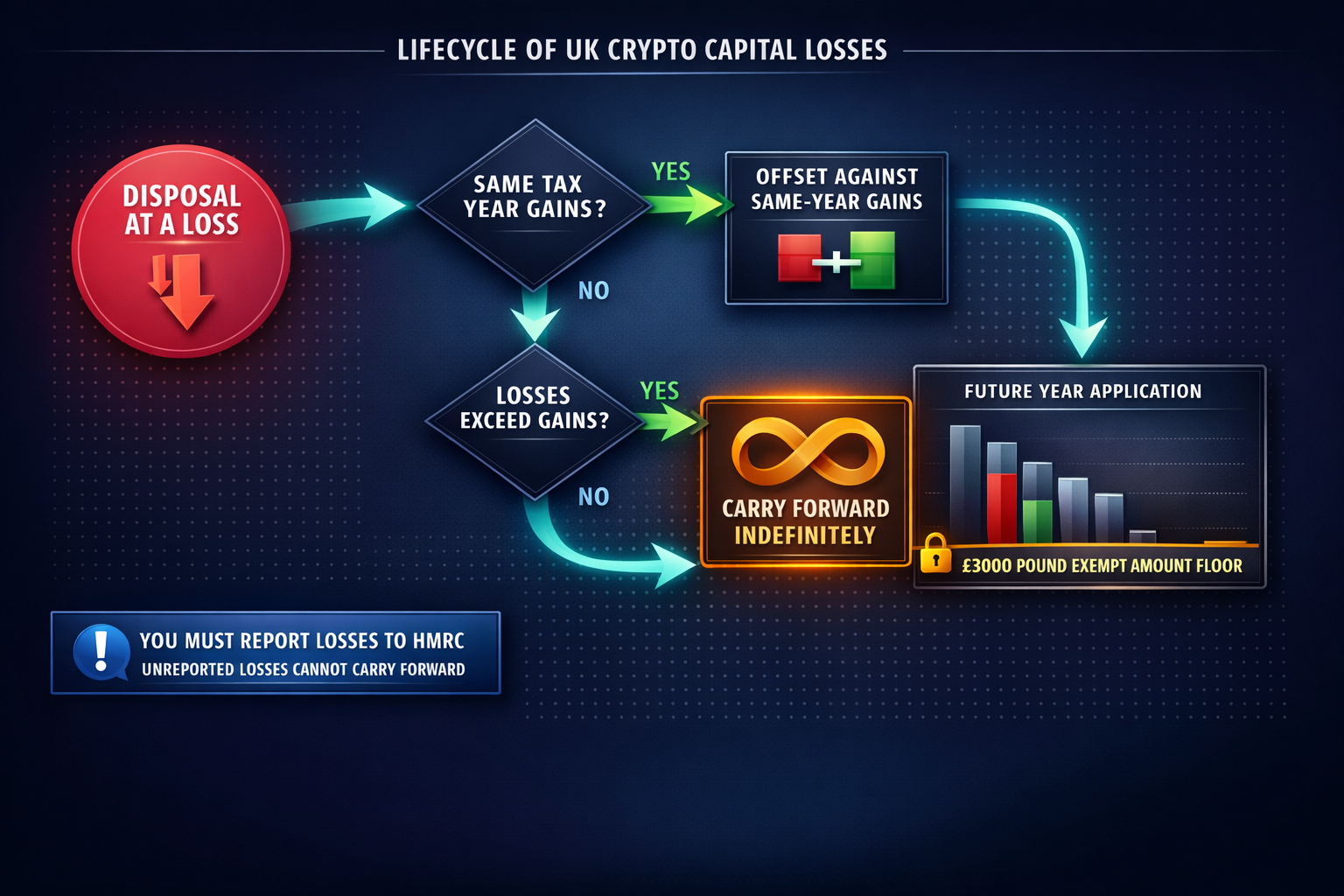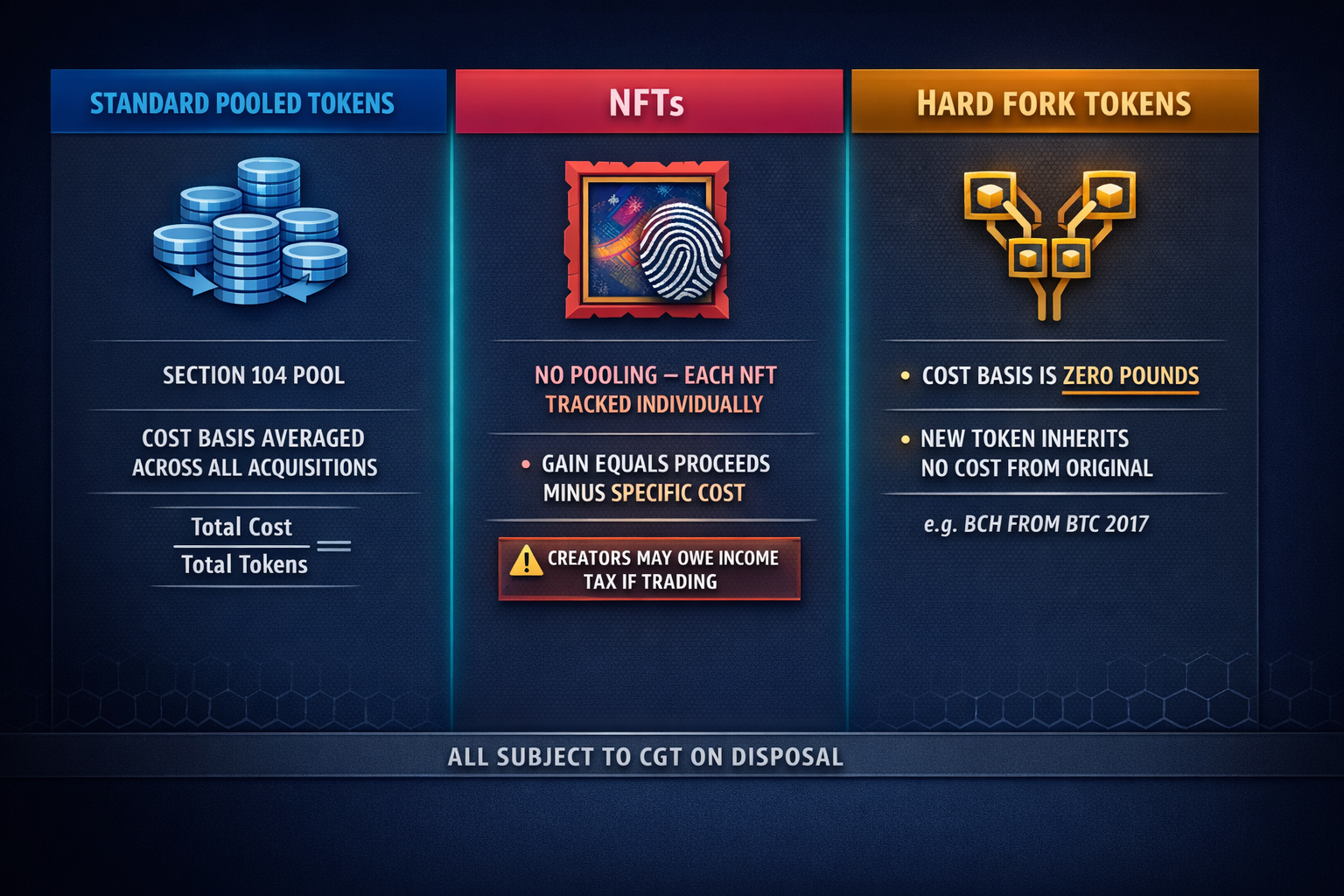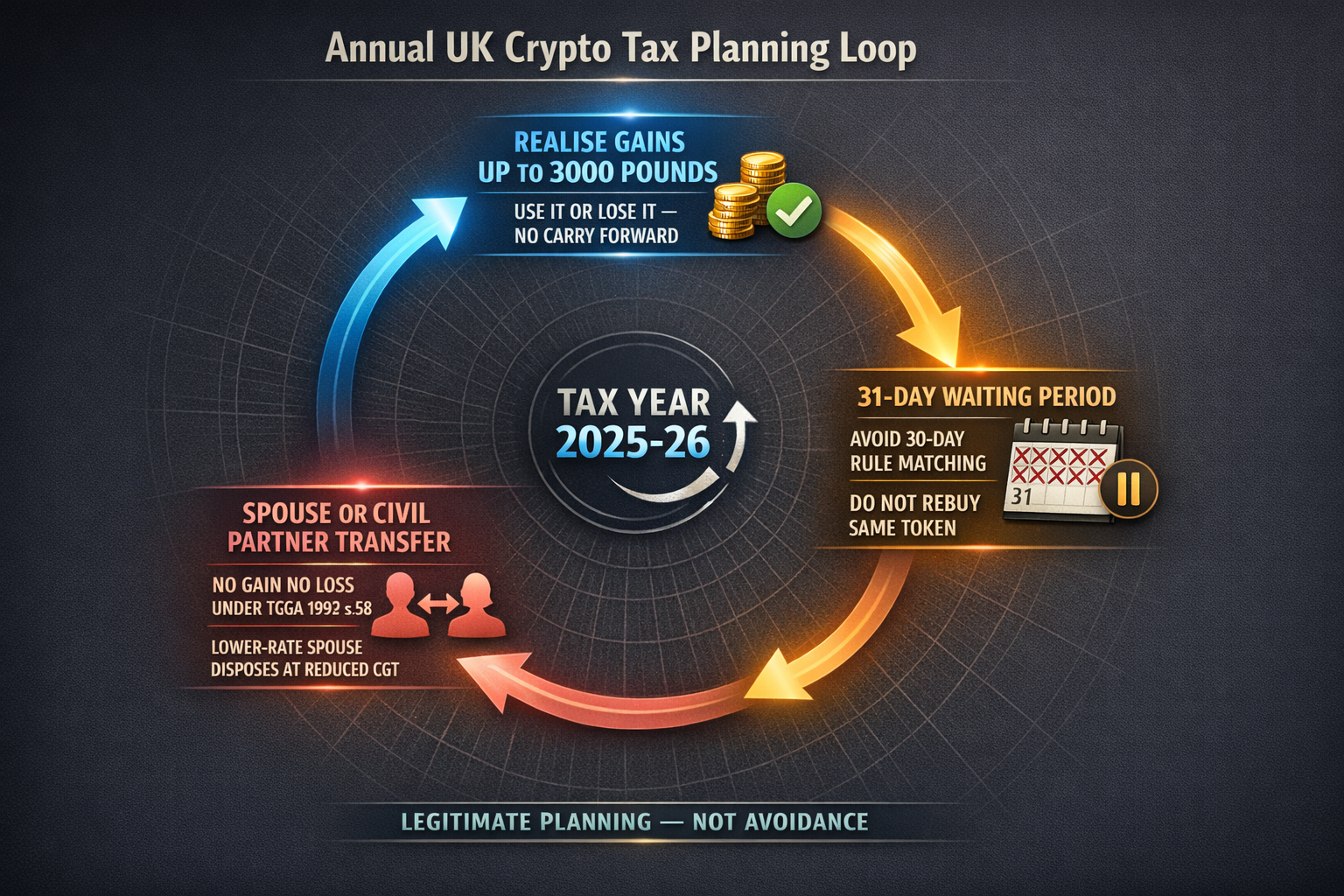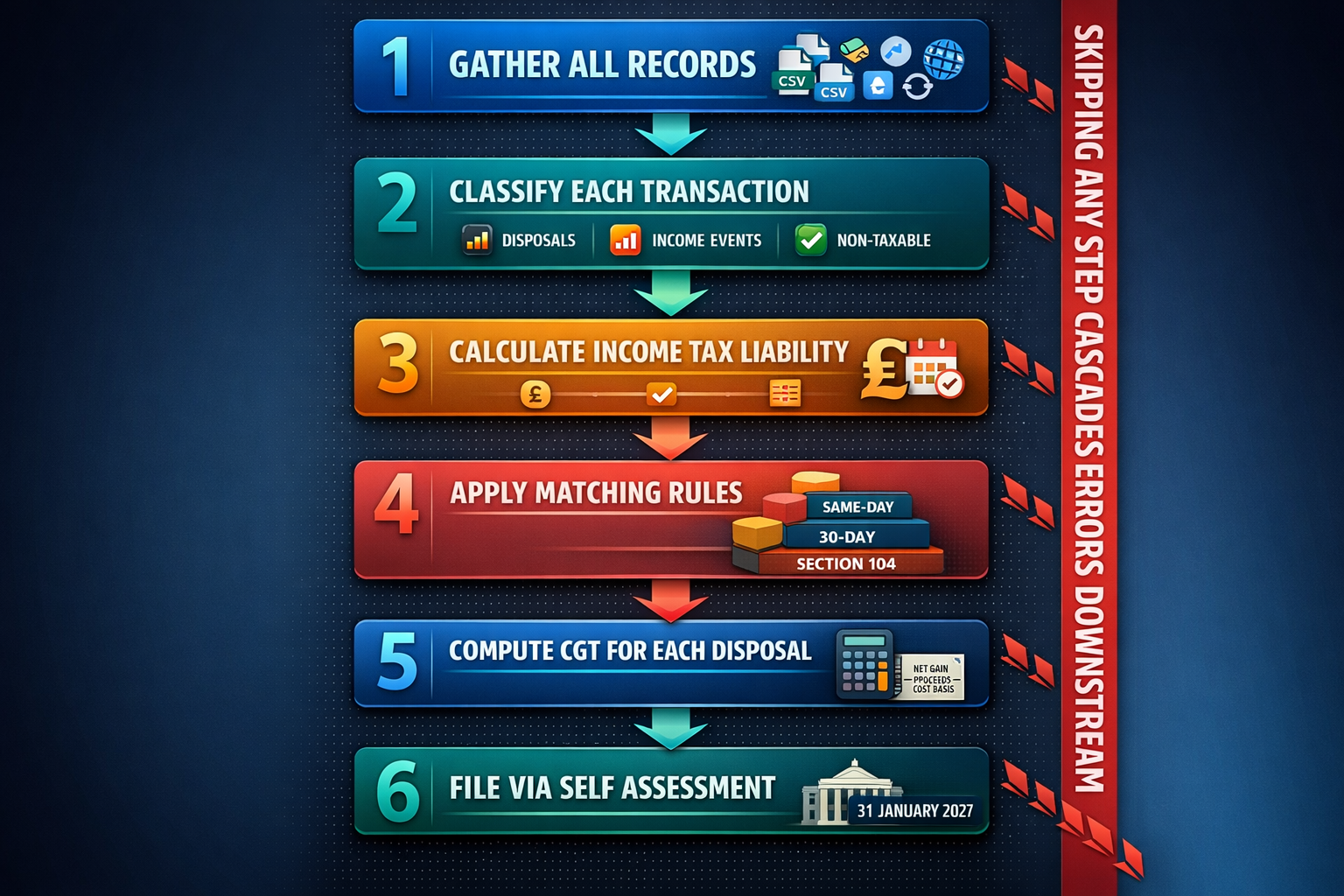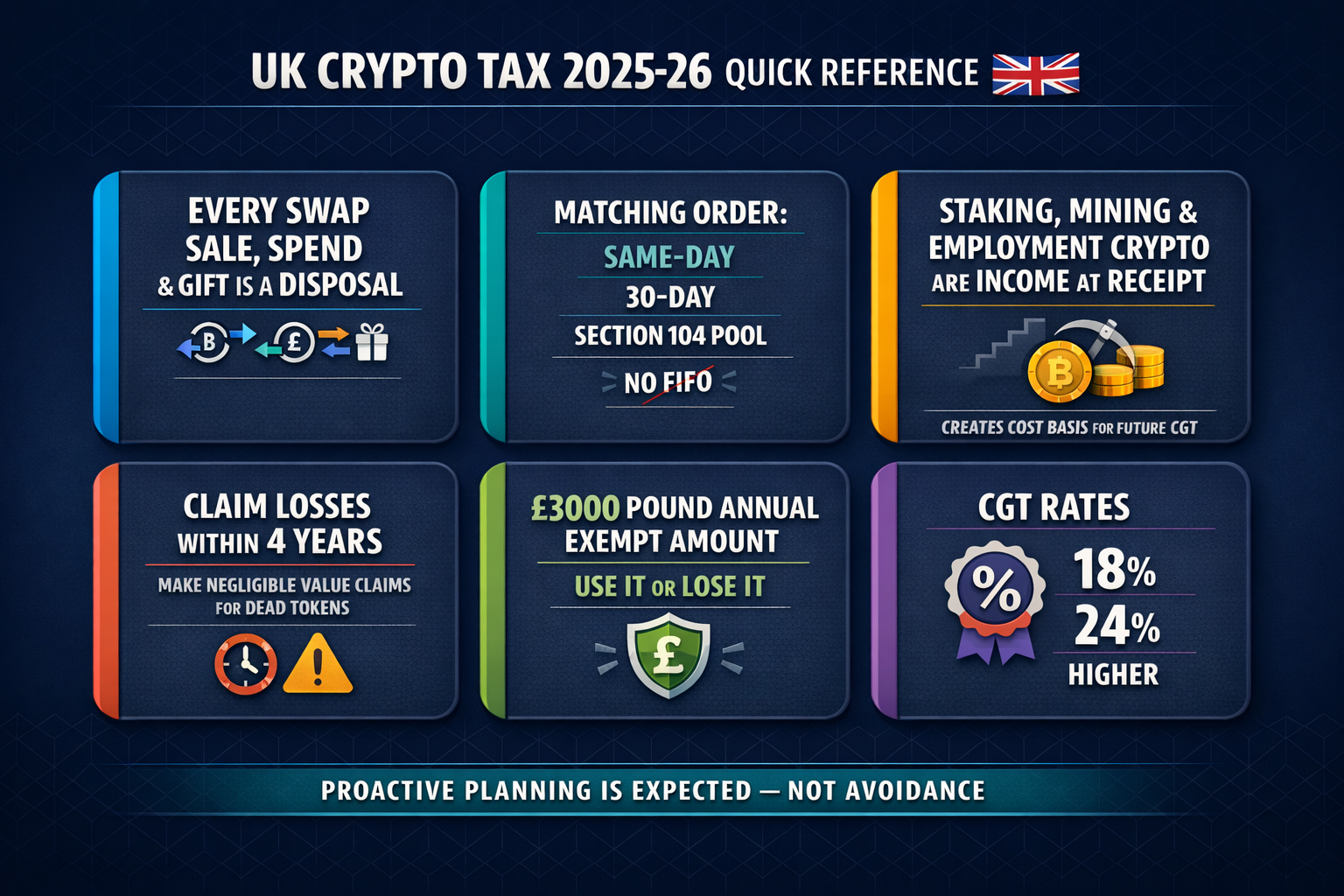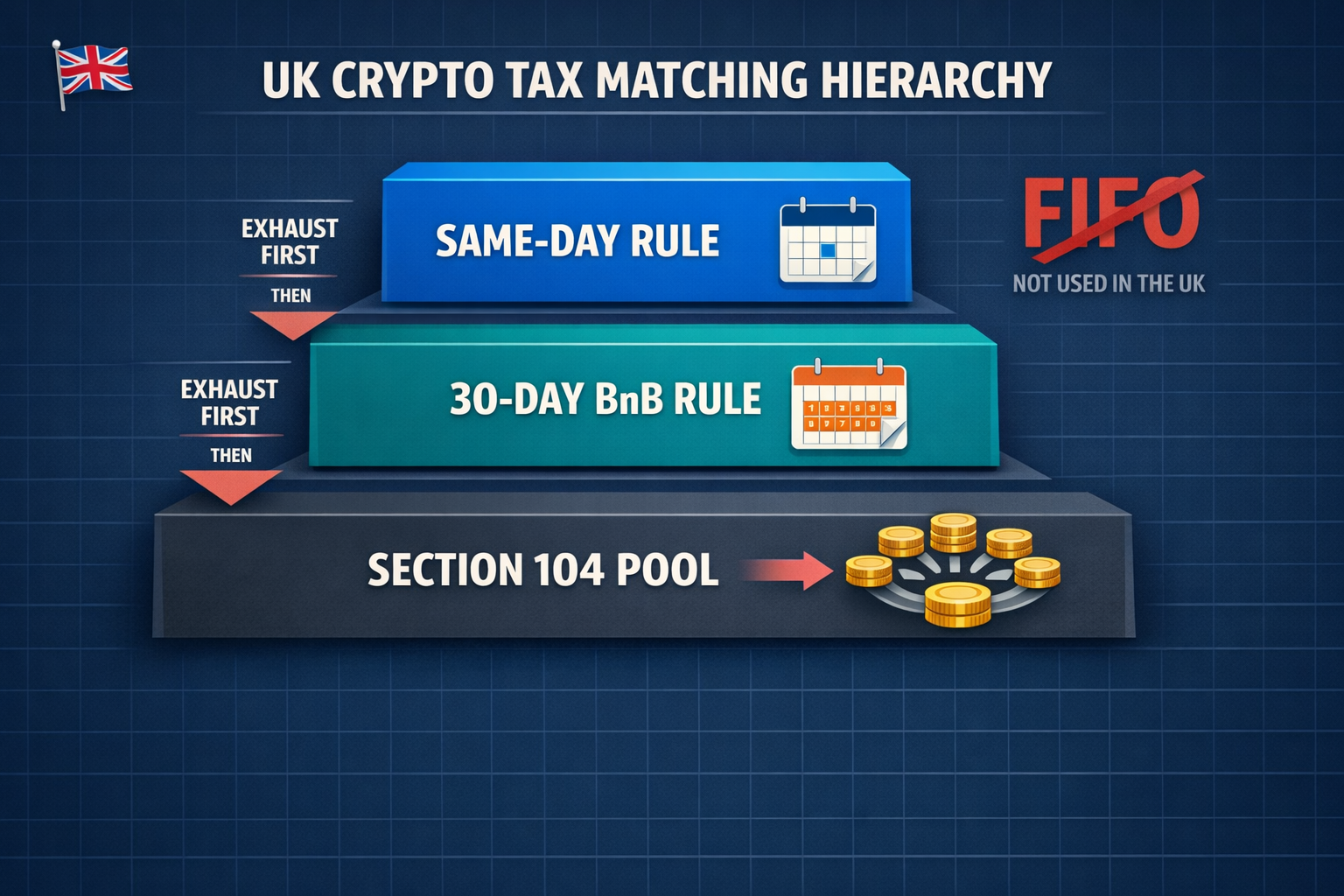
This article covers every rule, rate, and calculation method you need to report cryptoassets to HMRC for the 2025/26 tax year. It matters now because three forces have converged: the capital gains tax (CGT) annual exempt amount has been slashed to £3,000 (down from £12,300 just three years ago), CGT rates on all non-property assets—including crypto, shares, and other investments—were raised from 10%/20% to 18%/24% from 30 October 2024, aligning them with the rates that previously applied only to residential property, and HMRC is receiving bulk transaction data directly from exchanges.
The mechanism behind that data sharing deserves concrete explanation, because it is the single biggest reason the enforcement landscape has changed. The OECD Crypto-Asset Reporting Framework (CARF) requires crypto platforms worldwide to collect and automatically transmit user transaction data—including transaction amounts, wallet addresses, and taxpayer identification numbers—to the user's home tax authority. The UK has committed to CARF implementation, with the first automatic exchanges of information expected in 2026/2027. Separately, the EU's DAC8 directive requires EU-based crypto platforms to report from 1 January 2026; the UK will receive this data about UK-resident users through reciprocal agreements. And since at least 2019, HMRC has been issuing direct data requests to UK-serving exchanges including Coinbase, Binance, and Kraken, receiving customer names, transaction histories, and wallet addresses. HMRC has also contracted with on-chain analytics firms such as Chainalysis and Elliptic, which can trace transactions across decentralised exchanges and through mixers. The window for quiet non-compliance has functionally closed.
HMRC's penalty and interest regime reinforces the point, and the details matter enough to warrant careful attention. They are covered in full in the compliance section later in this guide. For now, the headline: late filing triggers an immediate £100 penalty that escalates over time, interest on unpaid tax is calculated at the Bank of England base rate plus 2.5% (currently 7.0% as of mid-2025, though this fluctuates with rate decisions), and for deliberate and concealed non-disclosure, HMRC's statutory assessment window under TMA 1970 s.36 extends to 20 years—meaning gains from the 2017 bull run are still within scope today.
"I didn't know" is not a defence. HMRC expects reasonable care, which means making a genuine effort to understand your obligations. That's what this guide delivers.
What this means practically: every UK resident who has sold, swapped, spent, or earned crypto needs to understand the rules below—not eventually, but before the 31 January 2027 filing deadline for the 2025/26 tax year.